Commercial Gaming Revenue Tracker
Q2 2026 Commercial gaming Revenue Tracker
The American Gaming Association’s (AGA) Commercial Gaming Revenue Tracker features state-by-state and nationwide financial performance data with breakdowns for individual gaming verticals.
TOPLINE INDUSTRY TRENDS
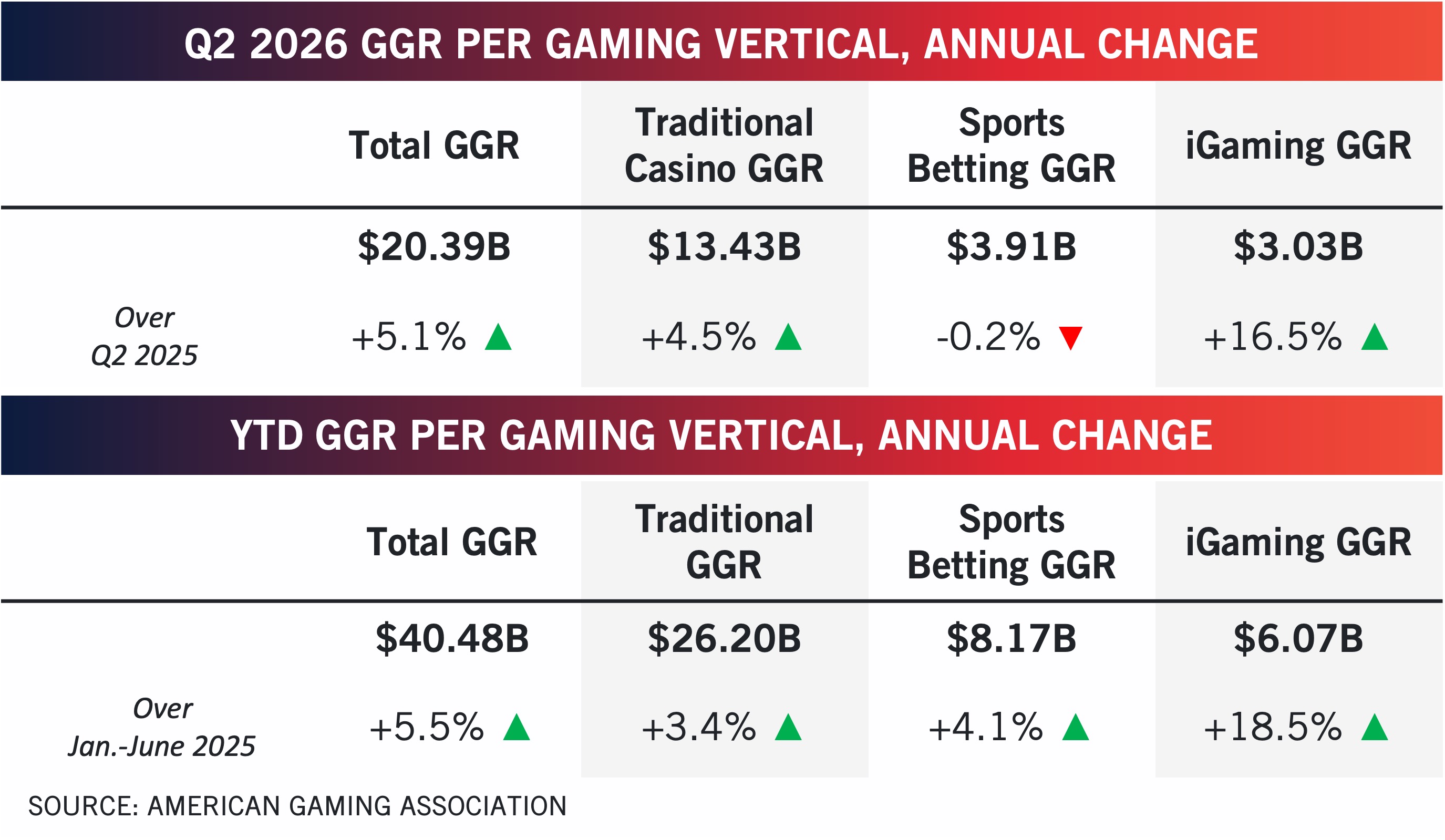
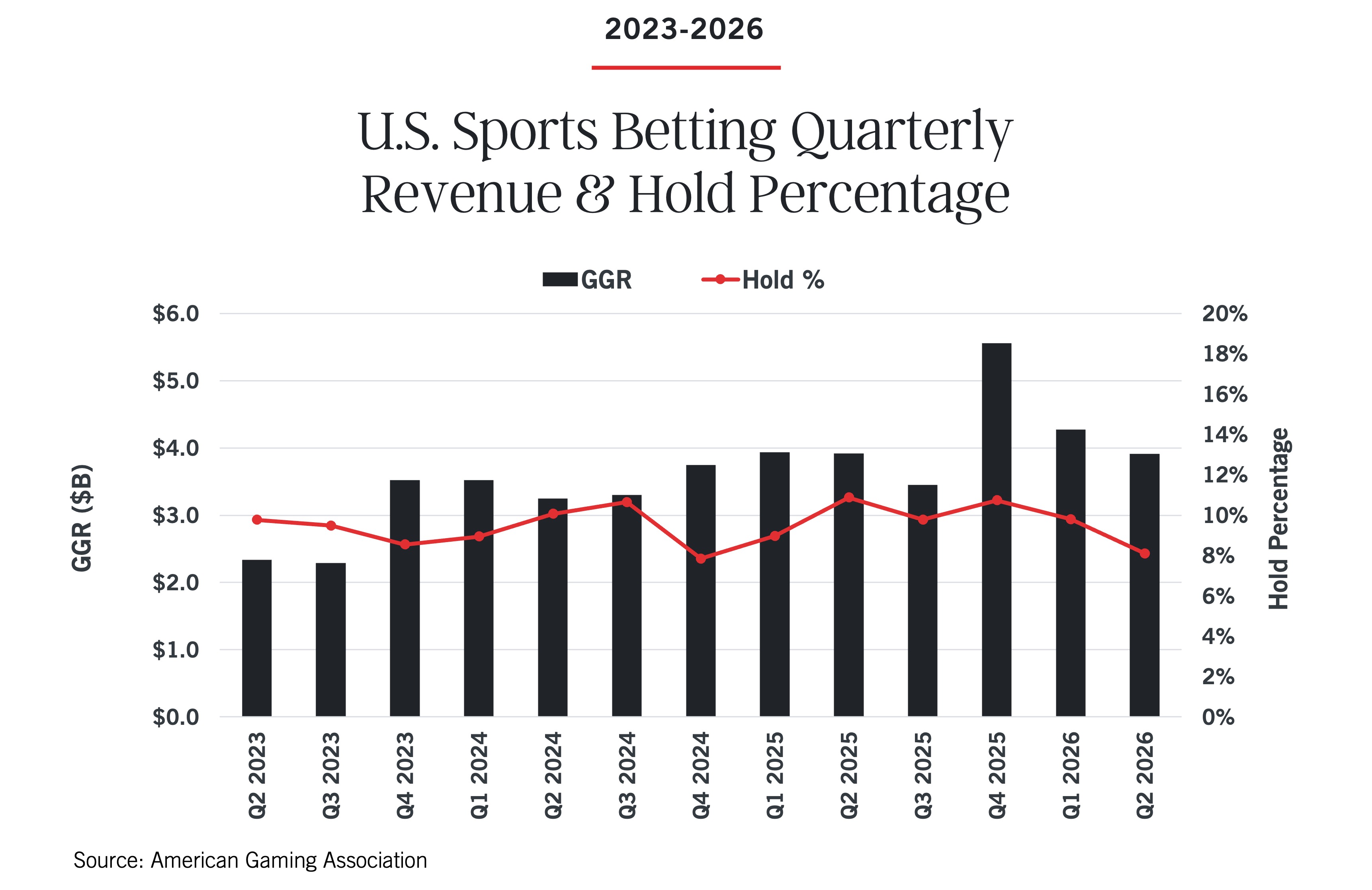
Sports Betting Shifts in Q2 2026: Commercial gaming revenue expanded across two of the three major verticals in the second quarter, reaching $20.39 billion, a 5.1% increase over last year. Quarterly sports betting revenue contracted for the first time, excluding periods influenced by the pandemic.
Q2 Ends Flat: June commercial gaming revenue totaled $6.36 billion, up 50 basis points year-over-year.
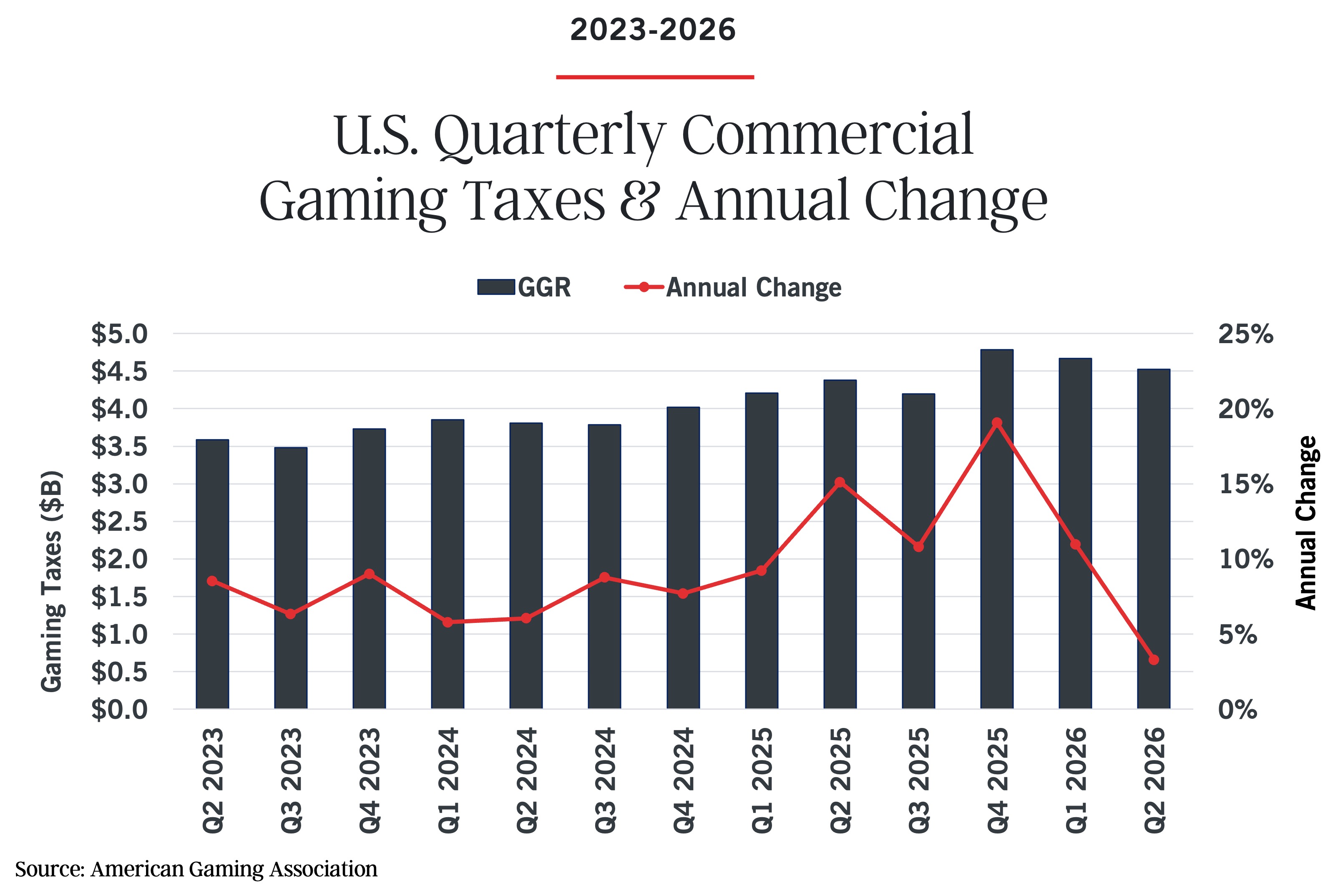
Gaming Taxes Stall: State gaming taxes increased 3.3 percent in the second quarter, the slowest growth since Q4 of 2020.

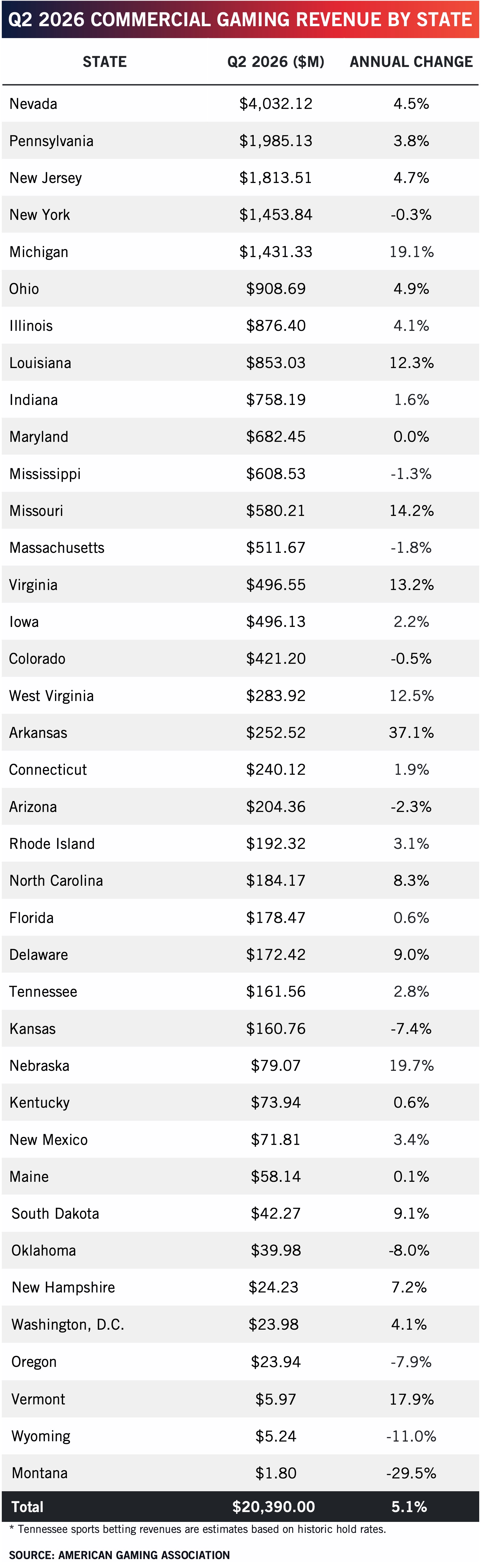
28 of 38 commercial gaming states saw annual commercial gaming revenue increases in Q2 of 2026.
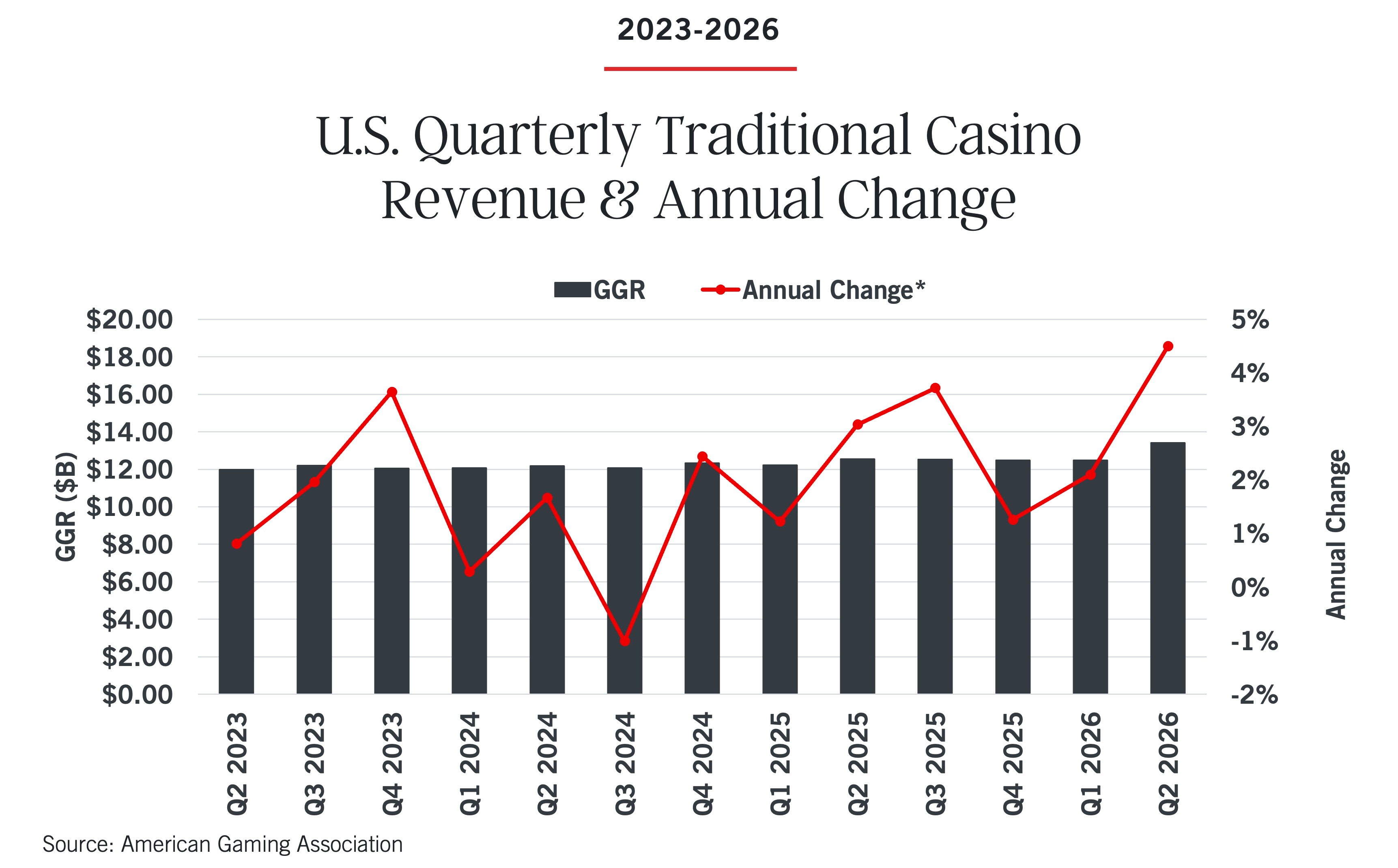
Traditional casino gaming expanded by 4.5 percent to $13.43 billion in the second quarter of the year. Both slot (+4.2%) and table (+3.2%) revenue increased in Q2. For June, slot growth was +1.9% while table game revenue contracted slightly (-1.2%).
$9.77 Billion
generated by slot machines in Q2 2026.
$2.60 Billion
generated by table games in Q2 2026.
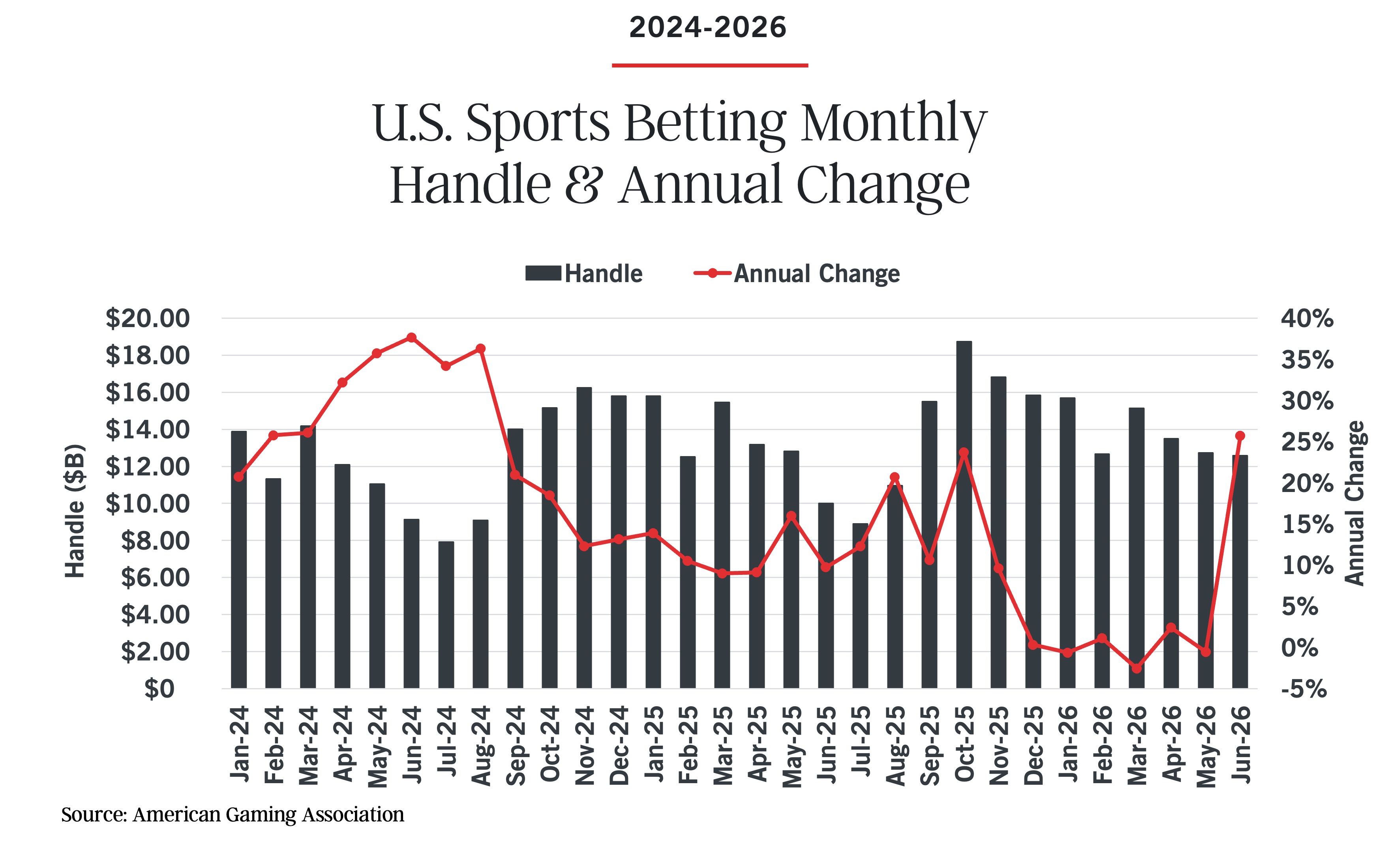
Sports betting revenue totaled $3.91 billion (-0.2%) in Q2 with a handle of $38.84 billion (+7.8%). The revenue decline was driven by a lower hold, which fell 81 basis points to 10.1% percent in Q2.
Benefiting from the World Cup, June handle increased 26% to $12.59 billion, June revenue, however, declined 18.3% due to a substantially lower hold rate of 8.1%, down from 12.5% last year.
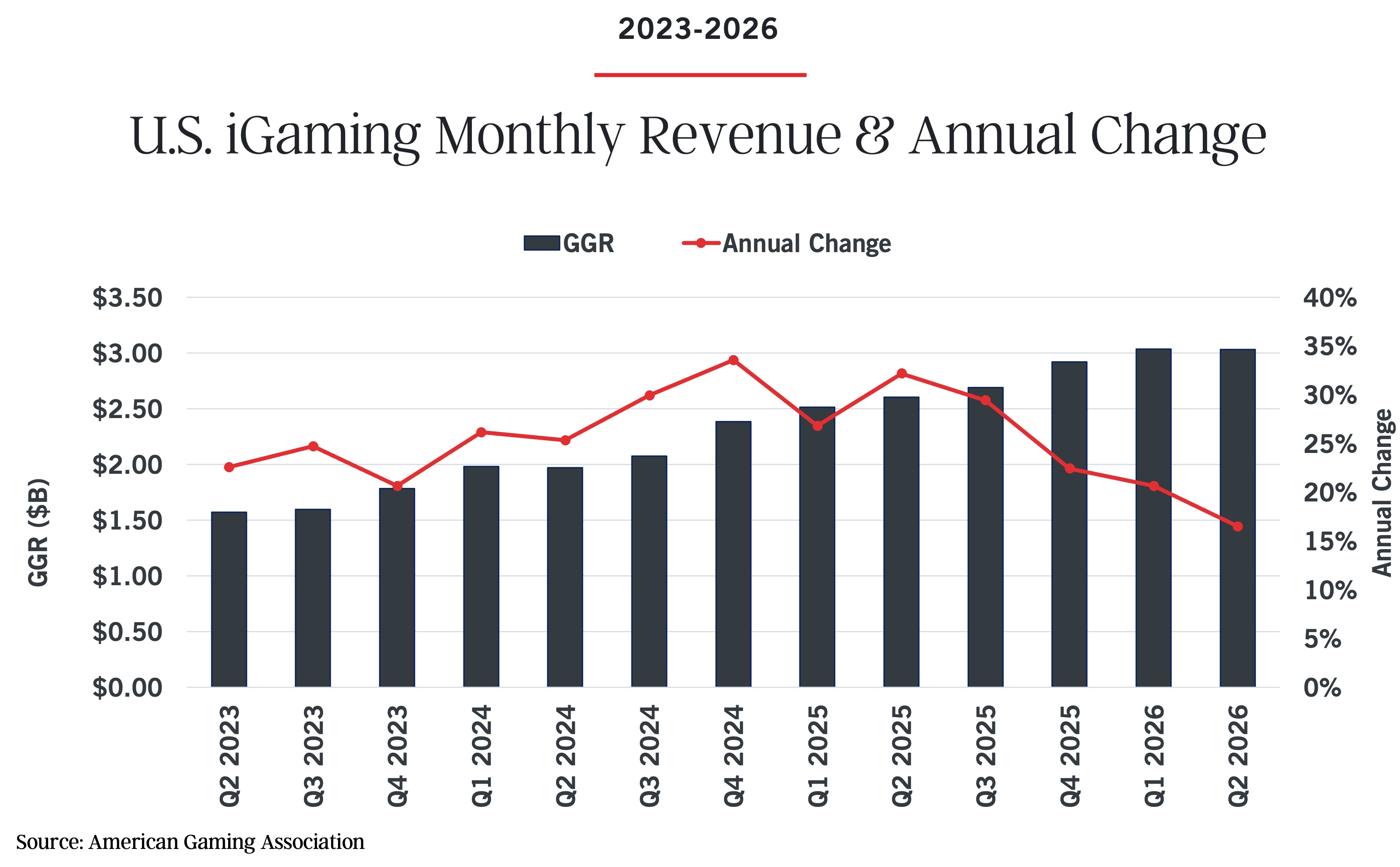
iGaming generated $3.03 billion in Q2 revenue, a 16.5 percent increase compared to the previous year. June iGaming revenue expanded 19.9 percent to $999.2 million.
State Budget Impacts: Regulated gaming generated $4.53 billion in gaming tax revenue for vital state programs, increasing over three percent in Q2 over last year. This figure could be significantly higher but is impacted by operators of skill machines, “sweepstakes casino” sites and those offering sports bets through prediction market platforms, none of which pay state gaming taxes.
Prediction market platforms offering sports bets may have cost state governments more than $1.3 million in potential gaming taxes since the start of 2025, depriving seniors’ pension plans and responsible gaming programs, among other victims of critical funding.